


Expect somewhere between €20 and €30 per normostrana for a standard sworn translation between common language pairs, though rare languages, dense legal jargon or a tight deadline can push that higher. There’s no single fixed rate because the price depends on complexity, language pair and turnaround, so the smartest move is getting a proper itemised quote rather than guessing.
Cena právneho prekladu: prices at a glance
Here’s the bit everyone actually wants: real numbers. Legal translation in Slovakia is billed by the normostrana (a standardised page, more on that below), and prices shift depending on what you’re translating and into which language.
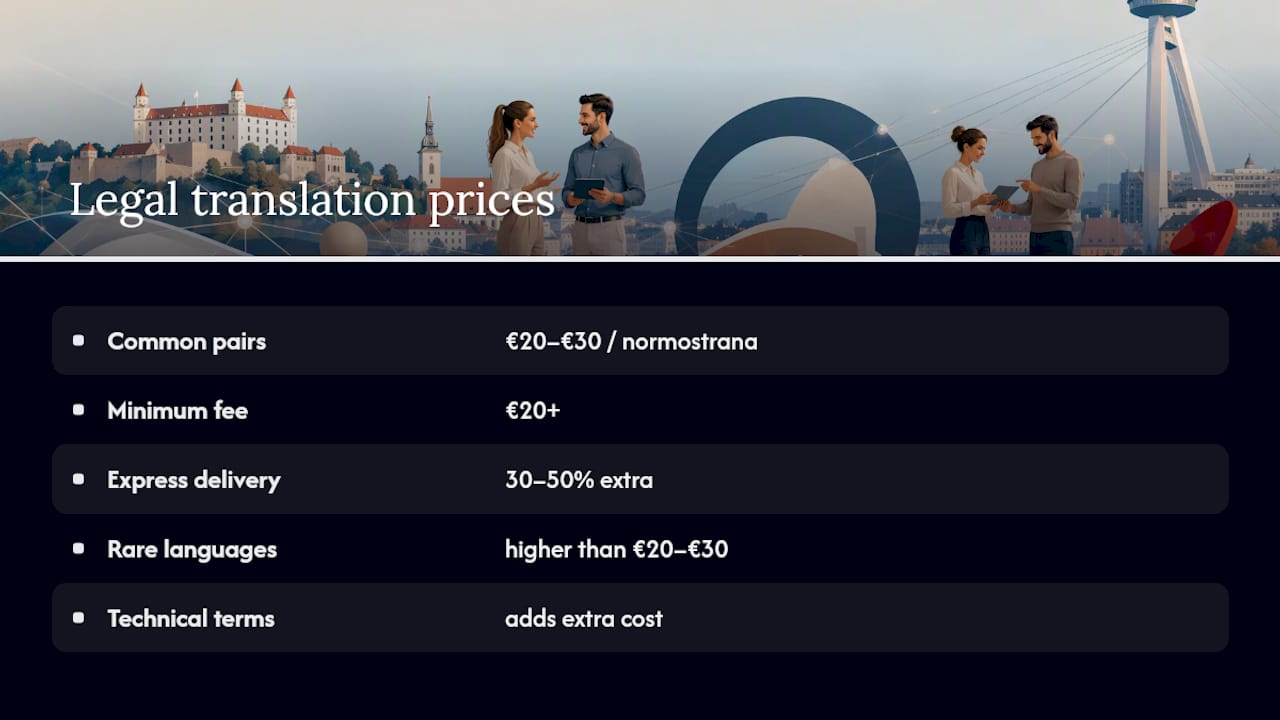
For common pairs like Slovak to English or German, úradný (sworn) translations typically run €20 to €30 per normostrana. Rarer languages, think Japanese, Finnish or Icelandic, push that up because fewer certified translators exist to do the work.
Most agencies charge a minimum fee even for a single-page document, so don’t be surprised if a one-line certificate still costs €20 or more. Express delivery (same day or next day) commonly adds 30 to 50% on top of the base rate. Rare language pairs and heavily technical legal terminology stack on top of that too.
What determines price: the six main drivers
Two quotes for the same document can look wildly different, and it’s rarely random. Here’s what actually moves the needle:
- Language pair rarity – fewer qualified translators for a language means higher demand-driven pricing.
- Subject complexity – dense legal terminology (think patent disputes or cross-border contracts) takes longer and costs more than a straightforward birth certificate.
- File quality and layout – a scanned, wonky PDF needs desktop publishing work before translation even starts, which adds time and fees.
- Certification requirements – sworn translations carry legal liability, so the price reflects that responsibility.
- Deadline – express turnaround is one of the fastest ways to inflate a quote.
- Volume – bulk projects or ongoing retainer arrangements often unlock discounted per-page rates.
Pro Tip: Send your file in editable format (Word, not a photo of a document) whenever you can. It skips the reconstruction step entirely and can shave a genuinely noticeable chunk off your final bill.
How pricing is calculated (normostrana, words, pages and minimums)
The unit that actually matters here is the normostrana, defined as 1,800 characters including spaces. It’s not the same as a Word page, which can hold anywhere from 250 to 500 words depending on font size and margins, so always ask which unit a quote is based on.
- Digital text (Word, PDF with selectable text) gets counted directly by character count and divided into normostranas.
- Scanned documents need character estimation or a word count conversion, which is why they sometimes carry a small surcharge.
- Per-word or per-hour pricing shows up for large technical projects or specialist consultancy work rather than standard document translation.
- Minimum fees apply almost universally. A single-paragraph document still gets billed as one full normostrana, and providers round up rather than down.
How to request a fair, comparable quote
Getting three quotes that actually mean something takes a bit of prep on your end. Here’s what to send:
- The original file, ideally editable rather than a scan or photo.
- The exact language pair and the document’s intended purpose (court, embassy, employer, and so on).
- Whether you need a sworn/official translation, an apostille, notarisation or layout work (DTP).
- A request for a full price breakdown: unit rate, express fee, extras, and whether VAT is included.
- A question about who reviews the translation and what happens if it’s rejected.
Stating the purpose upfront matters more than people think. If the provider knows it’s heading to a court or an embassy, they can flag legalisation steps in the quote instead of springing them on you later. Our guide to translating legal documents accurately walks through this in more depth if you want the full picture.
When you need a sworn (úradný) translation, and what it costs
An úradný translation is signed, stamped and legally binding, and in Slovakia only a translator registered with the Ministry of Justice can produce one. That signature means the translator is personally liable for accuracy, and that liability is exactly why sworn work costs more than a standard translation.
You’re typically looking at a premium over non-official rates, sometimes an extra few euros per normostrana, sometimes more depending on the document and language. It reflects the administrative steps, the certification, and the legal weight the document now carries.
This is precisely where cutting corners backfires. Guidance from the Ministry of Justice is blunt about it: pick an unverified cheap option and risk outright rejection by the receiving body. Our piece on what sworn translation actually involves covers the legal mechanics if you want more detail.
Extras and add-ons to watch for
The quoted per-normostrana rate is rarely the whole story. Watch for these:
- Express surcharges for anything under 48 to 72 hours, typically 30 to 50% on top.
- DTP charges for scanned, image-heavy or oddly formatted source files.
- Apostille, notarisation or legalisation, each usually billed separately from the translation itself.
- Revision or proofreading passes, particularly for anything going to court or a regulatory body.
Budgeting an extra 10 to 25% on top of your base quote for high-stakes documents isn’t paranoia, it’s just realistic planning for the add-ons that tend to appear once the project actually starts.
glocco® perspective and practical quality controls
We’ve been doing this since 2014, working across Europe on legal translation projects where getting it wrong isn’t an option. Our workflow always runs the same shape: a specialist legal translator handles the first pass, a legal reviewer checks terminology and context, then a QA pass catches anything either of them missed.
That structure exists because the Ministry of Justice’s own guidance points the same direction: pick certified translators for official documents, full stop. Before you sign anything, ask your provider about scope of work, liability if something goes wrong, confidentiality terms, and exactly what delivery format you’ll receive. Our certified translation guide breaks down what to look for in more detail.
Cost versus risk: our honest take
Here’s the thing nobody likes hearing: the cheapest quote is sometimes the most expensive mistake you’ll make. Pick a certified translator for anything high-stakes, court filings, contracts, embassy submissions, no exceptions.
Want to save real money without cutting corners? Send editable files instead of scans. It’s the single easiest way to trim cost and turnaround. Beyond that, just compare quotes properly and ask for an itemised breakdown before you commit.
— glocco®
Get a tailored quote from glocco®
Guessing at prices only gets you so far, so here’s the direct route: send us your document and we’ll give you an itemised quote, not a vague ballpark. We have extensive experience handling legal translation projects across Europe, working with specialist translators and legal reviewers to meet official requirements for documents like court filings, commercial contracts, or embassy certificates.
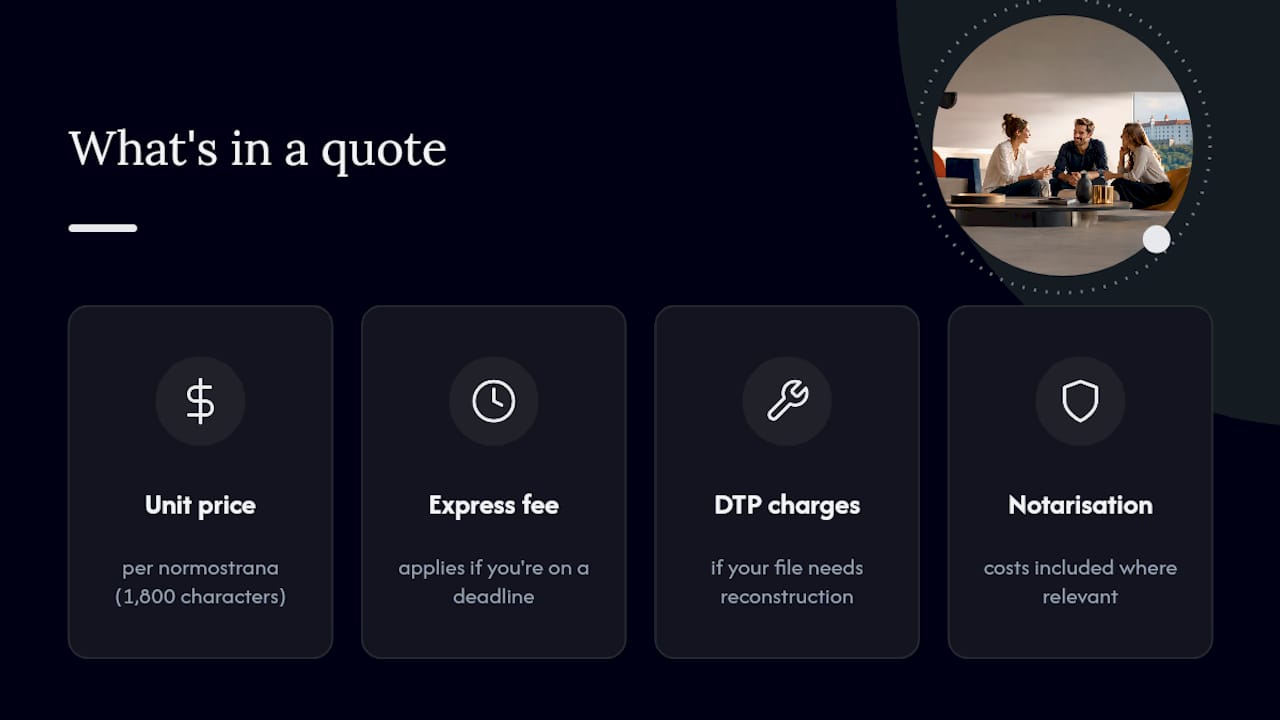
A typical glocco® quote breaks down into the unit price per normostrana, any express fee if you’re on a deadline, DTP charges if your file needs reconstruction, and notarisation costs where relevant. No mystery line items. Upload your file through our document translation service page and you’ll usually hear back with a clear estimate well within the same working day.
This article is general information, not a substitute for advice from a qualified lawyer. Consult a qualified legal professional about your own circumstances before acting on anything here.
Sources
- Information for interpreters and translators — Ministry of Justice of the Slovak Republic
- Teraz
- Cost of Translation Services: Legal, Medical, and Certified Rates – LegalClarity
FAQ
What is a normostrana in translation pricing?
A normostrana is a standardised unit equal to 1,800 characters including spaces, used across Slovakia to calculate translation fees consistently regardless of font or formatting.
How much does legal translation cost per page?
Sworn translations for common language pairs typically run €20 to €30 per normostrana, with rare languages and complex legal texts pushing that higher.
Why is a sworn translation more expensive than a regular one?
A sworn translator is legally liable for accuracy and must be registered with the Ministry of Justice, so the certification and administrative steps add to the cost.
Can I get a legal translation done faster for extra money?
Yes, most providers offer express turnaround for a surcharge, often 30 to 50% on top of the standard rate, depending on the deadline.
What information should I give when requesting a quote?
Send the original file (preferably editable), the exact language pair, the document’s purpose, and whether you need certification, an apostille or layout work, so the quote reflects the real job.


