


An NDA is a short document, so it’s easy to think it needs a quick translation. That’s the trap! One mistranslated word in a definition of “confidential information” can leave a gap that nobody notices until a dispute starts. This guide covers what to translate, which version counts, whether you need a certified translation, and how to keep the translation process itself confidential.
Why an NDA is a risky thing to translate
NDAs are short, but almost every line has a legal job. Definitions, exclusions, duration, permitted recipients and remedies all depend on exact wording. Legal English uses terms such as “representatives”, “affiliates” or “reasonable endeavours”, which have no tidy one-word match in Slovak law. A translator has to choose a Slovak term that does the same job under Slovak law, and a dictionary can’t make that choice for them.
Three typical failure points:
- The definition of confidential information. Too narrow in translation and information slips out of protection. Too broad and the clause becomes hard to enforce.
- Time limits. “Survives termination for five years” must stay unambiguous. Check that it is clear when the period starts.
- Remedies and governing law. Penalty clauses, injunctions and jurisdiction wording carry different meanings in different legal systems.
We go deeper on this in our piece on the role of confidentiality in legal translation.
Which version counts: one language, or both?
This is the first decision to make, and it comes before any translator is hired. You have three common options.
| Option | When it fits | Watch out for |
|---|---|---|
| One language only (often English) | Both sides work comfortably in that language | Slovak authorities or courts may ask for a Slovak version later |
| Bilingual, with a “prevailing language” clause | Cross-border deals between a Slovak and a foreign partner | Both texts must be checked against each other, or the clause is only decoration |
| Two equal versions | Rarely, when both parties insist | Any difference between them becomes an argument |
Our advice: for most business deals, a bilingual NDA with a clear prevailing-language clause is the tidiest. Have the same person or team check both columns, so the two texts don’t drift apart.
Do you need a certified translation?
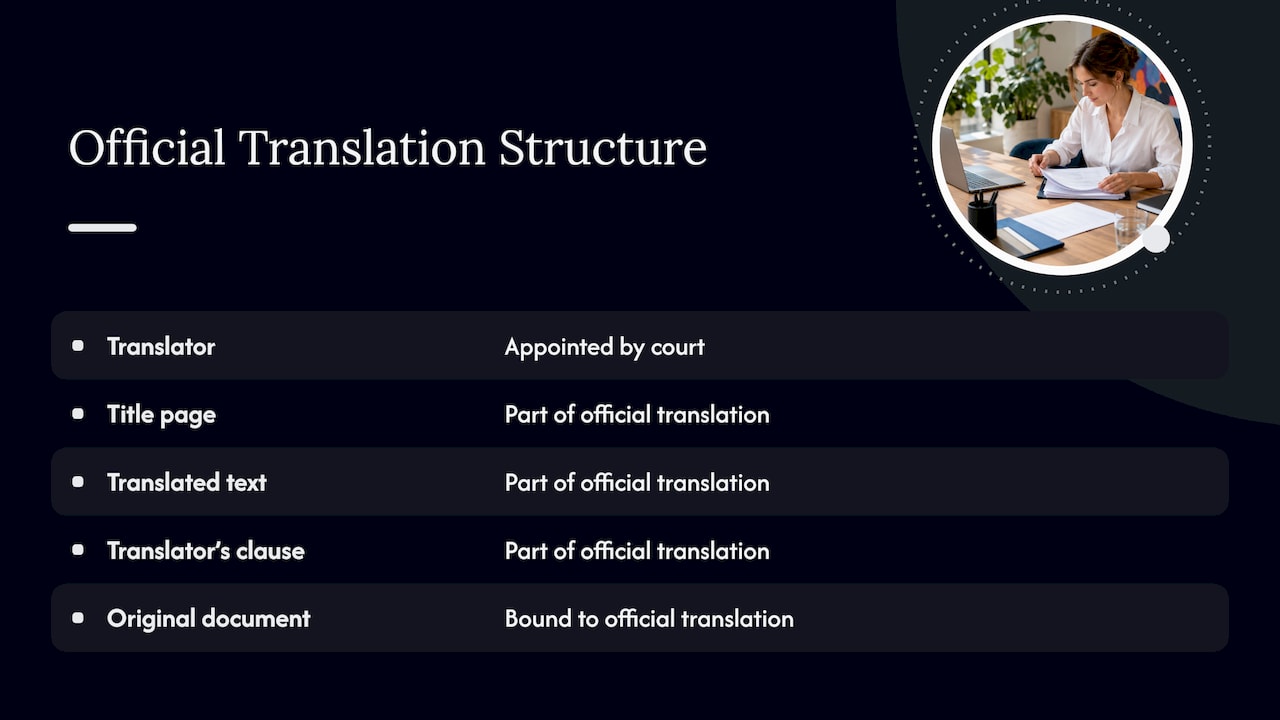
Only sometimes. In Slovakia, an official translation (úradný preklad) is made by a translator appointed by a court, with a translator’s clause and a stamp, and it is bound to the original. Slovak guidance describes it as a document made up of a title page, the translated text and the translator’s clause. You normally need one when a public body asks for it: a court, a registry, a public tender.
A private NDA signed between two companies usually does not need one. But think ahead. If you can imagine the NDA being filed in court proceedings or submitted to an authority, order the certified version at the start. It’s cheaper than redoing the job later. If you’d like the full picture, see our certified translation guide and our document translation guide for EU businesses.
What about price?
People search for the price of a translated contract, and fair enough. The honest answer is that it depends on a few things, and a flat rate per NDA would be misleading:
- Length. A two-page mutual NDA is a very different job from a 12-page one with annexes.
- Language pair and direction. Slovak into English, German, Hungarian or Czech are common. Rare pairs take more time.
- Certification. An official translation is a different product from a standard one.
- Deadline. Same-day turnaround costs more than a normal schedule.
- Review. A second linguist checking the text adds a step but cuts risk.
glocco® quotes per project, so send us the file and we’ll tell you what it takes. Short, repeatable NDAs are easier to handle too. If you sign the same template with many partners, translate it once, properly, and reuse it.
Keeping the translation itself confidential
Here is the irony: you are sending a confidentiality agreement to a third party. Treat that party like any other recipient of confidential information.
Ask these questions before you send the file
- Who will see the document? Ask for a named, limited team. Staff should be bound by confidentiality.
- Where is it stored and sent? Secure transfer, not ordinary email attachments for sensitive deals.
- Is there a written agreement with the provider? Your own NDA should cover the translation supplier too.
- What happens to the files afterwards? Agree on retention and deletion.
- Does the NDA contain personal data? Names, addresses and signatories are personal data under GDPR. Then the provider acts as a processor, and the contract should say how security is handled, including that only authorised people committed to confidentiality have access. The standard contractual clauses published on the EDPB site show the typical structure of such terms.
A processing agreement also shouldn’t just repeat the law. Translators’ associations have argued in an EDPB consultation that it should give specific, concrete detail on how the rules are applied. For general habits around handling personal data, these data protection best practices are a useful checklist for your own team.
Watch the audit clause
Standard NDAs sometimes give the other side sweeping access to a supplier’s premises. A translation provider also handles other clients’ files, so limit any audit to the processing activities that concern your documents. It protects everyone, including you. More on this in what is secure translation and our GDPR translation checklist.
If it ever reaches court
The EU Trade Secrets Directive requires member states to protect confidentiality of trade secrets during legal proceedings. Courts can restrict access to documents or hearings to a limited number of people. Your NDA, in both languages, is evidence in that situation. That’s one more reason to make the translation accurate from day one.
Our view: treat the NDA translation as part of the deal
We see NDA translation as a legal job first and a language job second. The best results come when the translator knows the contract type, the industry and the legal systems on both sides. That’s why we put specialist teams on legal work, and why we keep confidentiality at the centre of how we run projects.
A few habits we’d recommend to any company:
- Send a short brief: who the parties are, which law governs, which version prevails.
- Share your glossary or previous contracts, so terms stay consistent across your documents.
- Ask for a second check on definitions, durations and remedies, even if you skip it for the rest.
- Don’t paste an NDA into a free online tool. You’d be handing the content to someone with no obligations to you.
AI can speed up some workflows, but for a legal text we keep a human expert accountable for every clause. Our article on legal translation quality in the EU explains how that looks in practice.
— glocco®
Need your NDA translated?
Our HumanLegal service is built for contracts and other legal documents, with specialist linguists and a confidentiality-first process. Tell us the language pair, the page count and whether you need a certified version, and we’ll come back with a project quote. Prefer a wider look first? Start from glocco.com.
FAQ
Can I use the English NDA in Slovakia without translating it?
Often yes, if both parties understand it and no authority requires Slovak. The risk is that a Slovak court or office may ask for a translation later. A bilingual version with a prevailing-language clause removes that worry.
Does an NDA translation need a stamp?
Only if someone official demands it, such as a court or a registry. A private agreement between two companies normally works with a standard professional translation. If in doubt, ask the body that will receive it before you order.
Is it safe to send an NDA to a translation agency?
It is, if you set the rules first: a named team, confidentiality commitments, secure transfer and agreed deletion. Where the document includes personal data, add a GDPR-compliant processing agreement as well.
How is the price of a translated contract decided?
By length, language pair, certification, deadline and review level. Providers usually quote per project after seeing the document, so ask for a quote with the file attached.
Sources
- Directive (EU) 2016/943 on trade secrets, EUR-Lex
- Standard Contractual Clauses under Article 28(3) GDPR, EDPB site
- Úradný preklad v digitálnej dobe, Biznis
- Best practices for protecting user data, Moxy Web


