


Real-time language support is the continuous translation of spoken or written communication between languages during live interactions, enabling instant multilingual understanding without delays or interruptions. Also known as simultaneous language assistance, it sits at the intersection of automatic speech recognition (ASR), machine translation (MT), and optional text-to-speech (TTS) output. For EU business professionals managing multilingual customer support across borders, this is no longer a nice-to-have feature. It is operational infrastructure. Get it right, and you serve customers in 150+ languages without hiring a single extra agent. Get it wrong, and you lose the conversation before it even starts.
What is real-time language support and how does it work technically?
The technical pipeline behind live language assistance runs through three core stages: ASR converts spoken input into text, MT translates that text into the target language, and TTS optionally converts the output back into speech. Each stage must complete its task fast enough to feel natural to the person on the other end of the call or chat.
Modern systems target 100–200 milliseconds latency to maintain conversational rhythm. That is roughly the gap between a human thought and a spoken word. Miss that window, and the conversation starts to feel stilted, even if the translation itself is accurate.
The three main interaction modes are:
- Speech-to-speech: Live voice calls translated in both directions, used in contact centres and medical consultations.
- Speech-to-text: Agent speaks, customer reads the translated output, common in chat-based support.
- Text-to-text: Both parties type; the system translates in the background, the most common mode in digital customer service.
Deployment models split into two camps. Turnkey solutions suit conferences and events where a slight delay is tolerable. API-based builds are the right choice for customer-facing products where strict latency control is non-negotiable. The difference comes down to the orchestrator layer, which handles partial result rendering to keep conversations fluid by delivering incremental translations rather than waiting for a full sentence to complete.
Pro Tip: If you are evaluating real-time translation tools, ask vendors specifically about their streaming orchestrator. That single component determines whether your customer experience feels natural or robotic.

What operational benefits does real-time language support bring?
The headline number is hard to ignore. Deploying integrated real-time translation for customer support can reduce operational costs by up to 60%. That saving comes primarily from language-agnostic routing, where agents handle any customer regardless of language, removing the need to staff separate teams for each market.
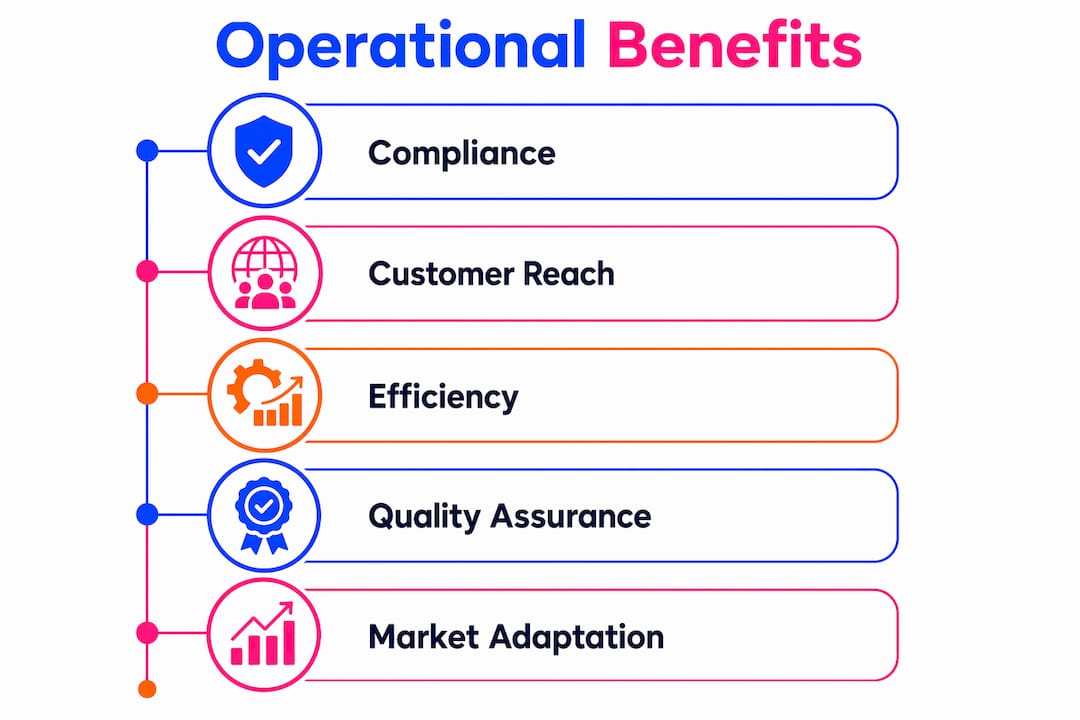
The practical upside extends well beyond cost:
- Language coverage without headcount growth: Systems support 150+ languages without adding specialist staff.
- Improved first-contact resolution: Customers explain their issue fully in their own language, reducing repeat contacts.
- Faster compliance response: In regulated markets like Spain, Ley 10/2025 requires companies to serve customers in regional languages with billing issue response windows as short as five days. Automated real-time support makes that deadline achievable.
- Higher customer satisfaction scores: Customers who communicate in their native language report greater trust and lower frustration.
Compliance is the underrated driver here. Regulatory pressure across the EU is pushing language accessibility from a customer experience aspiration to a legal obligation. Businesses that treat translation as infrastructure rather than an afterthought are the ones meeting those obligations without scrambling.
Pro Tip: Map your top five customer markets against their regional language regulations before selecting a solution. You may find compliance requirements, not customer volume, dictate your language priority list.
What are the strategic challenges of implementing live language assistance?
Technology alone does not deliver a good multilingual experience. Human-in-the-loop policies are critical for handling context, empathy, cultural nuance, and legal precision. AI handles the repetitive load well. Human agents protect brand reputation when conversations get complex, emotional, or legally sensitive.
The four areas that most often trip up implementations are:
- Glossary discipline: Generic AI models fail without domain-specific terminology. In fintech, legal, or medical contexts, a single mistranslated term can create liability. Domain-specific glossaries fed directly into the MT engine prevent those errors and maintain brand voice.
- UX continuity: Interruptions, gaps, or parallel channels undermine trust and lower customer satisfaction scores. The experience must feel like one conversation, not a translated relay race.
- Data governance: Integrating ASR, MT, and TTS pipelines into regulated workflows requires careful architectural design to preserve security and maintain data governance standards. GDPR compliance is non-negotiable for EU deployments.
- Handoff design: When a conversation escalates from AI to a human agent, the transition must be invisible to the customer. Clumsy handoffs destroy the trust the technology just built.
For regulated industries, human translators in legal contexts remain essential for final review and accountability. Technology accelerates the process. Human expertise validates it.
Pro Tip: Build your glossary before you go live, not after your first complaint. Retroactive fixes to terminology errors in regulated sectors are expensive and reputationally damaging.
How can businesses apply real-time language support in practice?
Practical deployment starts with routing logic. Rather than routing customers to agents who speak their language, you route to agents with the right expertise and let the translation layer handle the language. That single shift unlocks your entire agent pool for every market you serve.
The most effective implementations share four characteristics:
| Characteristic | What it means in practice |
|---|---|
| Language-agnostic routing | Any agent handles any language; expertise drives assignment |
| Native speaker QA | Human reviewers validate AI output in high-stakes interactions |
| Streaming partial transcripts | Incremental output keeps the conversation feeling live |
| Sector-specific glossaries | Domain terminology fed into MT prevents costly errors |
Blending AI efficiency with native speaker quality assurance is the model that consistently delivers the best results. AI handles volume and speed. Native speakers catch the nuances that matter most to customers and regulators alike.
For rapid-response environments like fintech or e-commerce, streaming partial transcripts are the single most important UX feature. Partial-result rendering keeps conversations fluid by delivering incremental translations, preventing even short latency gaps from feeling like long pauses. The psychological effect on the customer is significant. They feel heard, even while the system is still processing.
Glocco works with clients across e-commerce, legal, medical, and manufacturing sectors to integrate AI tools for translators alongside human expertise, ensuring both speed and accuracy in multilingual interactions.
Why real-time language support is more than a tech upgrade
At Glocco, we have watched language shift from a line item in the customer service budget to a core piece of operating infrastructure. That shift is not gradual. It tends to happen the moment a business loses a customer, or a compliance audit, because their translation layer failed under pressure.
The businesses we work with that get this right share one mindset: they treat language support as an experience enabler, not a translation task. The difference shows up in customer satisfaction scores, in reduced escalations, and in the confidence of their compliance teams. The technology is genuinely impressive. But the results come from pairing it with human judgement, glossary rigour, and a clear understanding of what your customers actually need to hear, and how they need to hear it.
The EU’s regulatory direction is clear. Language accessibility is becoming mandatory, not optional. Businesses that build the infrastructure now will spend far less time and money catching up later.
— glocco®
Glocco’s language services for multilingual EU operations
Glocco has supported businesses across Europe, the Middle East, and North America since 2014, combining translation, interpretation, and AI services into a single, accountable language operation. Whether you need interpretation services for European businesses or a full language services solution for global business, Glocco brings the human expertise and technical depth to make it work. Our teams specialise in regulated sectors including fintech, legal, medical, and e-commerce, where accuracy and compliance are not negotiable. If your business is expanding across EU markets and language is becoming a bottleneck, let’s talk about what the right infrastructure looks like for your operation.
FAQ
What is real-time language support?
Real-time language support is the live translation of spoken or written communication between languages during an active interaction, using a pipeline of automatic speech recognition, machine translation, and optional text-to-speech to deliver instant multilingual understanding.
How many languages can real-time translation tools support?
Modern real-time translation systems support 150+ languages, enabling businesses to serve global customers without expanding their agent headcount.
What latency is acceptable for live language assistance?
Systems should target 100–200 milliseconds latency to maintain natural conversational rhythm. Delays beyond this range make interactions feel unnatural and reduce customer satisfaction.
Why is human oversight still needed in real-time language support?
AI handles repetitive translation tasks efficiently, but human agents are essential for managing empathy, cultural nuance, and legal accuracy in complex or sensitive interactions.
How does real-time language support help with EU compliance?
Regulations such as Spain’s Ley 10/2025 require businesses to serve customers in regional languages within tight response windows. Real-time automated language support makes meeting those deadlines operationally viable.


