


Effective interpretation is defined as the real-time transfer of spoken meaning across languages with no loss of accuracy, intent, or nuance. Knowing how to streamline interpretation means reducing the cognitive load on interpreters, cutting errors, and keeping communication flowing naturally. The latest research points to AI-driven cognitive-semantic cue-enhanced scaffolding as the most significant advance in improving interpretation efficiency right now. Standards from bodies like NRPSI (National Register of Public Service Interpreters) and CIOL (Chartered Institute of Linguists) confirm that preparation, continuity, and technology together form the backbone of any high-performing interpretation workflow.
How to streamline interpretation: prerequisites and tools
Getting the foundations right makes everything else easier. Before any session, you need the right mix of technology, preparation, and human expertise working together.
The core technological layer for modern interpretation includes three components:
- Dialect-aware ASR (Automatic Speech Recognition): Processes spoken input accurately across regional accents and low-resource dialects, reducing transcription errors before they reach the interpreter.
- Semantic cue extraction: Identifies key terms, discourse relations, and semantic roles from the transcript in real time, giving interpreters structured prompts rather than raw text.
- Real-time scaffolding interfaces: Display extracted cues visually, grouping related concepts so interpreters can scan and process information faster.
AI tools assist in high-frequency terminology extraction and strategic competence building without replacing human expertise. That distinction matters. The technology supports the interpreter; it does not substitute for them.
Pre-session briefings are equally non-negotiable. Thorough briefings covering session objectives, specialist terminology, and cultural context directly improve interpreter performance and reduce miscommunication risks. Send glossaries, speaker bios, and agenda documents at least 24 hours before the session.

Pro Tip: Ask the client to flag any acronyms, brand names, or technical terms specific to their sector. A five-minute briefing call the day before a session can prevent ten minutes of confusion during it.
For virtual setups, low-latency audio is the single most critical hardware requirement. Aim for end-to-end latency below 2 seconds. Beyond that threshold, cognitive fatigue sets in for both interpreters and participants.
How does AI-driven cognitive scaffolding improve meaning retention?
Cognitive-semantic cue-enhanced scaffolding is a method where AI analyses incoming speech, extracts structured semantic cues (think: subject, action, object, discourse marker), and displays them to the interpreter in real time. The interpreter uses these cues as a memory and comprehension aid rather than relying solely on working memory.
Here is how to implement it step by step:
- Audio capture and dialect-aware ASR processing. Feed live audio into an ASR engine trained on the relevant dialect or language pair. Dialect-aware models outperform generic ASR on low-resource language inputs.
- Semantic role labelling. The system tags each segment with roles: agent, action, patient, location, time. This gives the interpreter a structured map of each utterance.
- Discourse relation tagging. The system flags connectives (cause, contrast, sequence) so the interpreter knows how ideas relate before rendering them.
- Visual grouping and cue display. Cues appear on a secondary screen or overlay, grouped by semantic category. Visual grouping reduces the time needed to scan and process information.
- Interpreter rendering. With cues available, the interpreter focuses on fluency and cultural adaptation rather than raw recall.
The results are measurable. Meaning retention improves by 8.5% compared to baseline in low-resource dialect interpretation when cue-enhanced scaffolding is used. That figure represents a meaningful reduction in misunderstood segments across a full session.
| Condition | Semantic errors per 100 segments | Lag cost |
|---|---|---|
| No scaffolding (baseline) | Highest | Baseline |
| Plain ASR transcript | Moderate | +0.52 ± 0.21 s |
| Cue-enhanced scaffolding | Reduced by ~4.8 units | +0.19 ± 0.18 s |
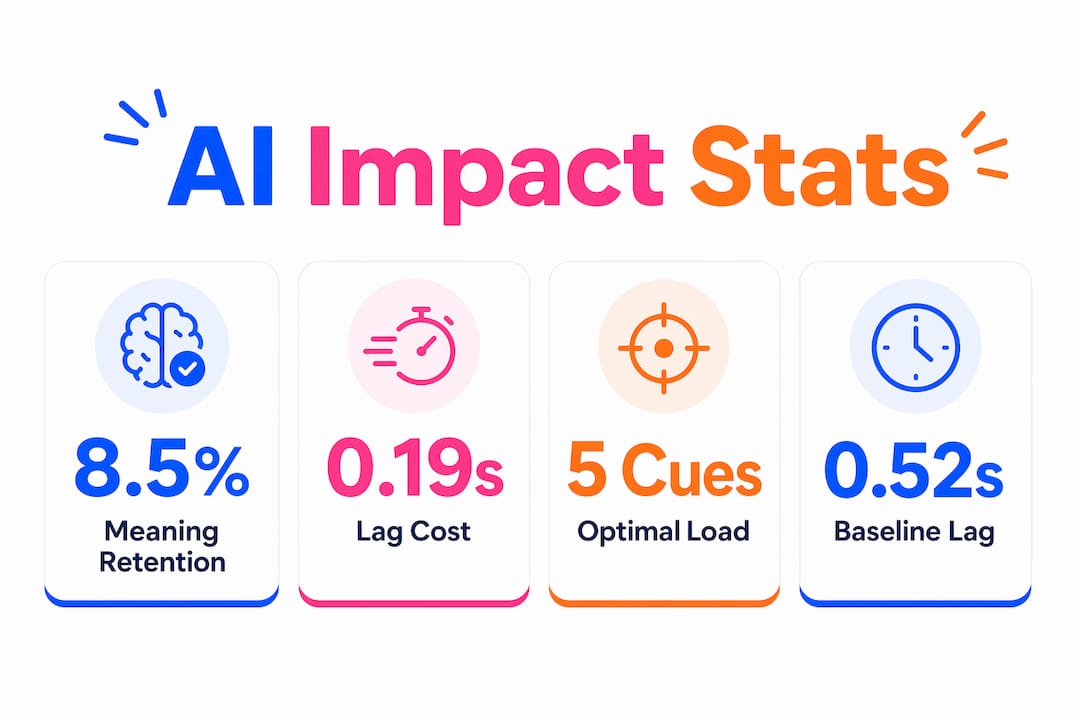
The lag cost comparison is telling. Cue-enhanced scaffolding adds only 0.19 seconds of lag compared to 0.52 seconds for plain transcript display. You get better accuracy with less delay. That is a rare combination in any technology.
Pro Tip: Keep cue displays to five items or fewer per segment. Balancing information density is key. Too many cues fragment attention and cancel out the accuracy gains.
What best practices ensure smooth interpretation workflows?
Effective interpretation workflows depend on consistent protocols, not just good technology. The following practices apply whether you are working with in-person, remote, or hybrid setups.
- Use first-person language throughout. First-person communication preserves natural conversational tone. Speak directly to the other party; the interpreter relays your words as if they are the speaker. Avoid saying “Tell him that…” as it creates an awkward, indirect dynamic.
- Book the same interpreter for recurring sessions. Continuity of interpreter-client pairings builds familiarity, improves confidentiality, and increases client comfort over time. Familiarity with a client’s terminology and communication style is a genuine performance advantage.
- Manage speaking pace actively. Interpreters may ask for slower speech, repetition, or spelling of unfamiliar terms. Virtual interpreting protocols require all participants to respect these requests without frustration.
- Prioritise cultural sensitivity. Interpreters do more than translate words. They navigate cultural context, register, and implication. Brief them on any culturally sensitive topics before the session starts.
- Use professional interpreters, not ad hoc arrangements. Untrained bilingual staff introduce confidentiality risks and accuracy gaps. Professional interpreters trained to NRPSI or CIOL standards maintain impartiality and accuracy under pressure.
These practices apply across sectors. A legal team in London and a medical team in Dubai face different content, but the same workflow principles reduce errors in both contexts. Glocco works across both environments and has seen first-hand how these protocols change outcomes.
How to optimise technology and reduce latency in virtual interpreting?
AI simultaneous interpretation runs through six pipeline stages: audio capture, ASR, machine translation (MT), post-editing or quality filtering, text-to-speech (TTS), and audio delivery. Each stage adds latency. The goal is to minimise cumulative delay without sacrificing accuracy.
| Approach | Latency range | Key trade-off |
|---|---|---|
| Cascade (ASR + MT + TTS) | 600–1,500 ms | Modular, easier to optimise per stage |
| Direct speech-to-speech | Lower theoretical ceiling | Less mature; accuracy gaps in complex domains |
The cascade approach dominates 2026 deployments because each module can be independently updated or replaced. Co-locating ASR and MT providers on the same server infrastructure cuts network lag between stages significantly. That single architectural decision can shave hundreds of milliseconds off end-to-end delay.
Perceived latency below 2 seconds produces the best user satisfaction in video remote interpreting. When latency exceeds 3 seconds for 95% of interactions, quality perception drops sharply regardless of how skilled the interpreter is. Perceived latency affects cognitive fatigue more critically than measured latency in many cases.
Pro Tip: Start TTS output speculatively as soon as the first MT tokens arrive, rather than waiting for a complete sentence. This speculative TTS start reduces perceived latency without increasing actual error rates.
For remote interpreting setups, test your end-to-end latency before every high-stakes session. Use a round-trip audio test with a remote participant and measure the gap between speech and receipt. Fix it before the meeting starts, not during it.
Glocco’s take: the human-AI balance is the real challenge
Working across legal, medical, and corporate sectors since 2014, Glocco has watched AI scaffolding tools move from experimental to genuinely useful. The 8.5% improvement in meaning retention is real, and the latency data backs up what we have observed in practice. But here is the uncomfortable truth most technology vendors skip: the tools only work when the human interpreter is properly prepared and supported.
The biggest gains we see come not from the AI alone, but from combining cue-enhanced scaffolding with thorough pre-session briefings and experienced interpreters who know how to use the interface without being distracted by it. Decision-makers who invest in technology but cut corners on interpreter quality or preparation end up with faster errors, not fewer ones. The future of interpretation is genuinely exciting. Getting the human-AI balance right is where the real work happens.
— glocco®
How Glocco supports your interpretation processes
Glocco has been helping organisations across Europe, the Middle East, and North America improve their interpretation workflows since 2014. Whether you need professional interpretation services for legal, medical, or corporate settings, or you want to understand how AI fits into your language operations, Glocco’s team brings both the technology and the expertise. For teams ready to go deeper on AI-assisted workflows, the guide to AI tools for translators covers the practical toolkit in detail. If your work involves specialised legal or court contexts, the 2026 legal interpretation guide is worth your time. Glocco makes it straightforward to find the right service for your sector and scale.
FAQ
What is cognitive-semantic cue-enhanced scaffolding?
Cognitive-semantic cue-enhanced scaffolding is an AI method that extracts structured semantic cues from live speech and displays them to interpreters in real time. It improves meaning retention by 8.5% and reduces semantic errors compared to plain transcript display.
How much latency is acceptable in virtual interpreting?
Latency below 2 seconds produces the best user satisfaction in video remote interpreting. Above 3 seconds, cognitive fatigue and dissatisfaction increase significantly regardless of interpreter skill.
Why are pre-session briefings so important?
Pre-session briefings covering terminology, session objectives, and cultural context directly reduce miscommunication risks. NRPSI and CIOL codes of conduct both identify thorough briefings as a core requirement for accurate, impartial interpretation.
Should I use the same interpreter for recurring sessions?
Yes. Booking the same interpreter for recurring sessions builds familiarity with your terminology and communication style, improving both accuracy and confidentiality over time.
What is the difference between cascade and direct speech-to-speech AI interpretation?
The cascade approach processes audio through separate ASR, MT, and TTS stages with end-to-end latency of 600–1,500 ms. Direct speech-to-speech skips intermediate stages but remains less accurate in complex or specialised domains as of 2026.


