


Clinical study translation turns protocols, informed consent forms and outcome measures into conceptually equivalent, submission-ready documents in another language. It’s not a word swap. Regulators expect a validated, human-centred workflow behind every page, full traceability from draft to final sign-off, and data security tight enough to survive an audit. Standards like ISO 17100 and SOC 2 Type II are the baseline, not the bonus.
What is preklad klinických štúdií and which documents need it?
Here’s the thing nobody tells you upfront: not every trial document carries the same risk if the translation goes wrong. Some errors cause a delay. Others put a patient in danger.
Protocols and amendments sit at the centre of the whole trial. Get a dosing instruction or an eligibility criterion wrong here, and every site follows the mistake. Informed consent forms (ICFs) carry ethical weight: participants with limited English proficiency have to understand exactly what they’re agreeing to, in plain language, not translator-ese.
Clinical outcome assessments (COAs) and patient-reported outcomes (PROs) are trickier still. These need linguistic validation and cognitive debriefing, not just accurate wording, because the meaning a patient takes from a question has to match across languages, not just the dictionary definition of the words.
Then there’s the supporting cast that still matters:
- Case report forms (CRFs) and investigator brochures (IBs)
- Regulatory correspondence with agencies like the EMA
- Patient recruitment materials
- Pharmacovigilance and adverse event documentation
One meaning-changing error in patient-facing content can mean a participant misunderstands a risk, an ethics committee sends a submission back, or worse. Getting the role of translators in clinical trials right from day one avoids all three.
What does a validated clinical study translation workflow look like?
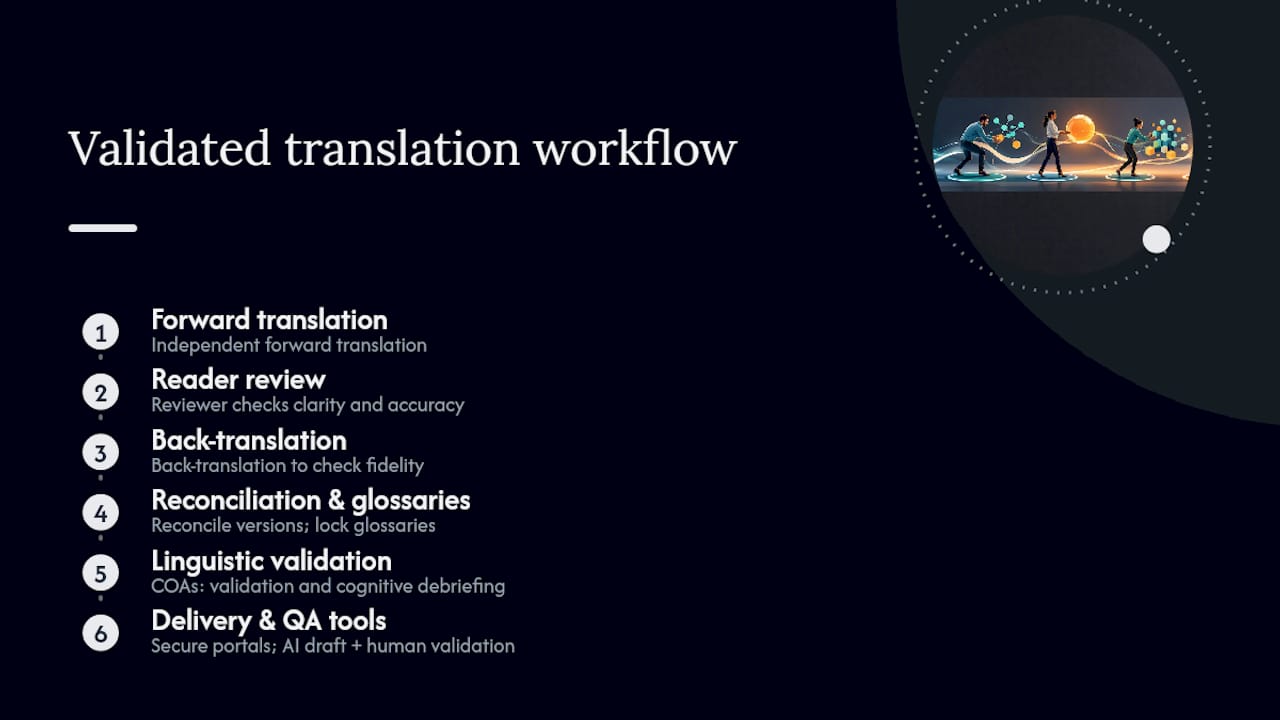
Regulators don’t just want a “good” translation. They want proof it was produced the right way, every time. That’s why the industry has more or less standardised on a five-step process, sometimes shortened to TEP (translate, edit, proofread) but really running deeper than that:
- Forward translation by two independent translators with subject-matter expertise in the therapeutic area.
- Target-language reader review to catch anything that’s accurate but sounds unnatural to a native speaker.
- Back-translation by a separate, blind reviewer, so nobody is grading their own homework.
- Reconciliation between the back-translation and the original, with the author or a subject-matter expert weighing in on discrepancies.
- Resolution, glossary lock and final sign-off, so the approved terms don’t drift between documents or amendments.
For COAs used as primary or secondary endpoints, add cognitive debriefing. Back-translation alone isn’t enough here because you’re checking whether patients understand the question the way it was intended, not just whether the words map back correctly.
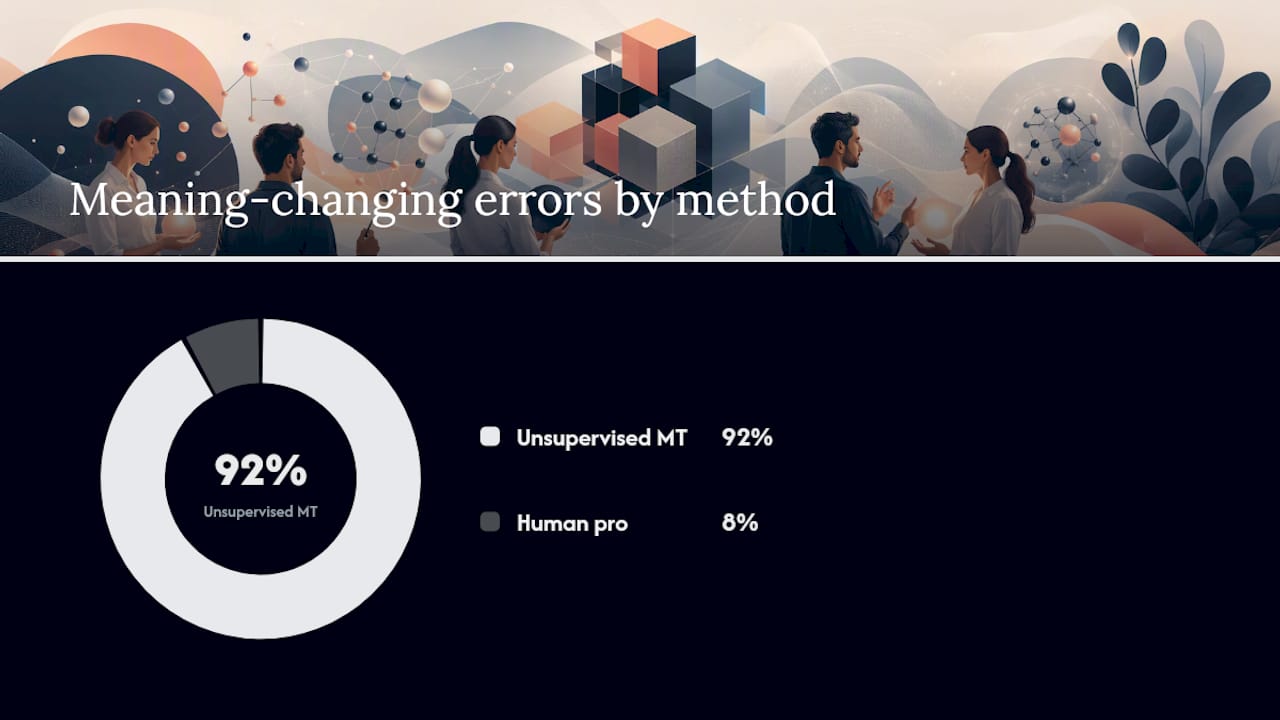
Machine translation has a place in this, but a narrow one. It’s fine for an early draft when a human is definitely going to post-edit it. Left unsupervised, though, MT gets risky fast: one industry study found 11 meaning-changing errors in unsupervised MT versus a single error in professional human translation of patient-facing content. That’s not a rounding error. That’s the difference between a clean submission and a query letter from an ethics committee.
Pro Tip: Lock your glossary before the second site opens, not after. Chasing down inconsistent terminology across twelve translated ICFs is a miserable way to spend a Friday.
Which certifications and deliverables should you expect from a vendor?
Ask any experienced regulatory affairs specialist what keeps them up at night before a submission, and “did the translator actually know what they were doing” is usually near the top. Certifications exist to answer that question before you have to ask it.
ISO 17100 governs translation quality management. ISO 18587 covers machine translation post-editing specifically, which matters given how much MT now feeds into first drafts. SOC 2 Type II is the security equivalent, and sponsors are increasingly treating it as non-negotiable rather than nice-to-have when trial data changes hands.
Beyond the certificates themselves, a proper vendor hands you a paper trail:
- A signed translation certificate for every document
- A reconciliation log showing how discrepancies were resolved
- A locked, version-controlled glossary
- Translator CVs demonstrating relevant subject expertise
- Linguistic validation reports for any COA used as an endpoint
Vendors running ISO-certified, integrated workflows tend to see fewer regulatory comments and faster study start-up, largely because auditors aren’t left guessing how a term was chosen three amendments ago. That’s the whole point of a translation quality assurance framework: it turns “trust us” into “here’s the evidence.”
How should trial data be secured during translation?
Trial files aren’t just business documents. They’re often personal health information, sometimes for hundreds of participants at once, moving between a sponsor, a CRO and a language vendor. That’s a lot of hands.
A few non-negotiables:
- SOC 2 Type II certification, checked, not just claimed
- A written no-training-data policy for any AI-assisted step, something sponsors are asking for more explicitly every year
- Secure transfer portals instead of email attachments
- Encryption at rest and in transit, with access controls and full audit trails
- Clear redaction and data retention rules, agreed in writing before the project starts
A security lapse doesn’t just breach privacy law. It stalls the whole submission while everyone works out what went wrong and who needs to be told.
How do you choose a clinical translation provider without wasting weeks?
Picking a vendor on price alone is how projects end up stuck in amendment purgatory three months later. Work through this before you sign anything:
- Ask for the documented workflow. If they can’t describe their five-step process in one paragraph, that’s a red flag, not a quirk.
- Confirm cognitive debriefing capability for any COA that’s an endpoint, not just a nice-to-have add-on.
- Request the locked glossary approach. How do they handle terminology once it’s approved? Who controls changes?
- Ask to see sample translator CVs for your specific therapeutic area.
- Verify the security certification directly, don’t just take the sales deck’s word for it.
- Pin down turnaround SLAs for amendments. Protocol amendments are inevitable. A vendor that can’t quote a realistic timeline for a fast-turn amendment will cost you more time than the translation itself.
The biggest cost and timeline drains? Vague glossary ownership, no clinician review step, and vendors who treat back-translation as optional rather than standard.
glocco®’s practical tips from projects
Here’s what actually saves time on the ground, not just in theory. Assign a dedicated project manager the moment the protocol is finalised, not once translation is already underway. That one decision prevents most of the “wait, who approved this term?” conversations later.
Pilot the ICF first. It’s usually the shortest high-stakes document, and running it early builds your glossary and stress-tests the workflow before the bigger files land on your desk. We blend AI-assisted drafting with human linguistic validation, which speeds things up without cutting corners on the audit trail regulators will eventually ask to see. Speed and traceability aren’t actually opposites. You just need the right order of operations.
— glocco®
How glocco® can help with clinical study translation
Right, here’s where we stop talking theory and start talking practice. The validated workflow described above is run as standard: independent forward translation, reader review, back-translation, reconciliation and locked glossaries, with linguistic validation and cognitive debriefing built in for COAs. The workflow supports many languages, backed by secure transfer portals and AI-assisted drafting that always gets a human validation pass before it goes anywhere near a submission.
Want an accurate quote? Send us the document type, target languages, word count and whether it includes a COA or PRO. That’s genuinely all we need to scope it properly. If you’re not ready to commit a whole trial’s documentation yet, pilot a single ICF with us first. It’s the fastest way to see how we work before the bigger files land. Explore our AI-assisted translation tools and get in touch to start scoping your project.
This article is general information, not a substitute for advice from a qualified doctor. Consult a qualified healthcare professional about your own circumstances before acting on anything here.
Sources
- Clinical Study Translation: A Regulatory-Ready Workflow
- PPD™ Translate solutions
- Language Services | ICON
- DeepL clinical trial translation use case


