


Legal data annotation means lawyers and trained annotators tag contracts, statutes and court decisions so that a machine-learning tool can learn from them. Get it right and your legal AI reads clauses, spots references and sorts documents reliably. Get it wrong and the model learns your mistakes, at scale. Here is how to do it properly, from labels to GDPR.
What legal data annotation actually involves
Short version: you turn messy legal text into labelled, structured data. Researchers describe the work as selecting raw datasets, extracting and cleaning text, and applying annotation guidelines so that machine-learning and NLP tools can use the result.
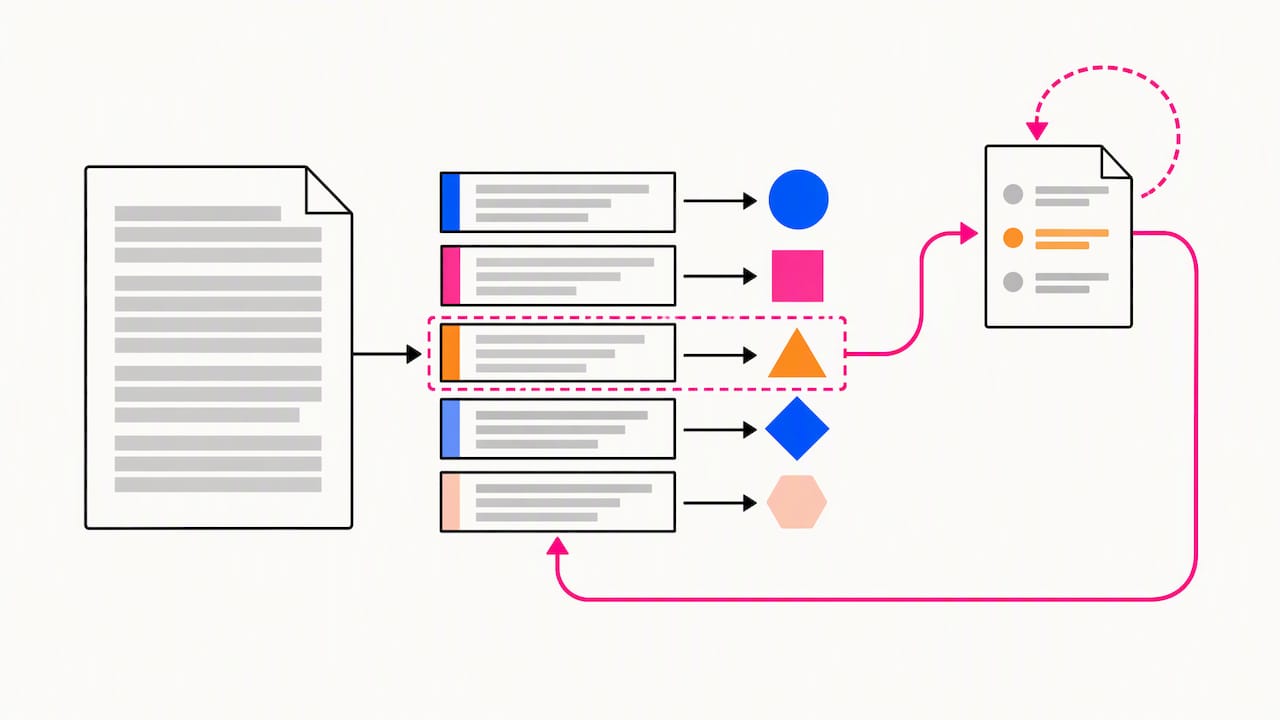
Typical legal tasks that rely on annotated data:
- Tagging clause types in contracts (termination, liability, governing law).
- Marking references to statutes and earlier decisions.
- Segmenting long judgments into parts such as facts, reasoning and ruling.
- Labelling named entities: parties, courts, dates, amounts.
- Classifying documents by area of law.
Why is this harder than annotating photos of cats? The same research points to complex document structures, specialised terminology and the need for legal professionals’ expertise to keep the context accurate. A label like “obligation” means something quite specific in law. A general crowd-worker will not always know it.
Step 1: define scope, labels and guidelines
Resist the urge to start tagging on day one! A project should first define its tasks, labels, pilot cases and sample selection, then refine its annotation protocols and dataset iteratively.
A workable order:
- Pick one question. “Find indemnity clauses in Slovak supply contracts” beats “understand contracts”.
- Draft a small label set. Fewer labels, clearer edges. You can add more later.
- Run a pilot on a handful of real documents and see where annotators disagree.
- Rewrite the guidelines using what the pilot showed.
The guidelines are the backbone. One practitioner paper says they should act as the primary reference, with both tool instructions and label definitions with examples, and stay easy to reach while people annotate. If you ever use crowd workers, keep them short: the same source notes that complex reference material can hinder recruitment. For legal work you will usually want trained specialists instead, so the guidelines can be richer.
Another tip from the research: annotators who renegotiate the annotation scheme together tend to produce more reliable guidelines for segmenting legal documents. Talk it through. Disagreement at this stage is cheap. Later it is expensive.
Step 2: handle Slovak terminology and several areas of law
Slovak is morphologically rich, so one legal term appears in many forms. That matters for consistency. The MARCELL corpus is a useful reference point: its Slovak sub-corpus holds 13,600 legislative documents with 32 million tokens, taken from the Slov-Lex portal. The project uses a shared CoNLL-U Plus format across languages, and its Slovak data was tokenised, lemmatised and morphologically annotated with MorphoDita.
What can you take from that for your own project?
- Agree one format early. If several languages are involved, a common structure saves you from rebuilding later.
- Lemmatise, don’t just tokenise. Slovak inflection otherwise splits one concept into many strings.
- Keep a term base. The same legal concept must get the same label and the same equivalent in every language. Our guide to terminology consistency walks through how project managers keep that under control.
- Separate areas of law. Criminal, civil and commercial texts use different vocabulary, so give each its own examples in the guidelines.
Working across Slovak and other EU languages? Check that translated material is legally valid before it becomes training data. Our piece on translating Slovak laws explains what counts.
Step 3: choose, train and check your annotators
Who annotates? In one legal-dataset study, annotators were law students supervised by senior jurists. Experts reviewed the annotations, and inter-rater agreement measured quality.
A sensible set-up:
- Annotators with real legal training, briefed on the guidelines.
- A senior reviewer who checks samples every round.
- Agreement scores tracked per label, so weak labels show up fast.
- A clear rule for conflicts: a majority vote among annotators is one common consensus method.
Disagreement is not always an error, by the way. Legal AI researchers call handling it a fundamental task: the annotations need to be both legally accurate and technically robust for model training. Sometimes two lawyers read a clause differently, and your dataset should know that.
Want a structured way to check all this? See how to run a quality audit of your annotation.
Step 4: prepare the dataset for training and testing
Annotation is only half the pipeline. A Slovak research project, ALTAML, describes processing court decisions in four layers: acquisition, transformation, quality and enrichment, and publication and export. In practice that means getting decisions, converting PDFs to XML, validating metadata and exporting data packages.
Two practical lessons:
- Plan the format conversion. Annotators often like familiar tools such as Word, but one researcher stresses that converting those outputs into structured formats like CoNLL adds complexity the project manager must budget for.
- Split your data on purpose. Keep a held-out set that nobody trains on, then re-test after every change. Ongoing evaluation beats a one-off launch.
Risks to plan for
Let’s be honest about what can go wrong:
- Messy sources. Complex structures, specialised terms, inconsistent formats and hard-to-extract legal references all lower quality.
- Over-trusting the model. Simple document annotations suit AI well, but complex judgments about legal reasoning stay difficult even for human experts, and errors there carry higher risk.
- No accountability. One proposal is supervised human and LLM collaboration where experts validate annotations and stay accountable.
The fix is boring and effective: a human legal check on anything that matters.
Privacy and confidentiality in the EU
Legal documents often contain personal data, sometimes sensitive. Before anyone annotates a file, decide what can be anonymised and who may see the rest. Under GDPR, automated decision-making and profiling need suitable safeguards, including the right to human intervention and an explanation. If your model feeds into decisions about people, build that in from the start.
In practice, ask any annotation partner for a data-processing agreement, clear access controls and a deletion plan. Budgeting for this too? Our GDPR-ready pricing template compares three pricing models for procurement.
Our perspective
We have worked in language services since 2014, and one thing keeps proving true: legal data is language work first. Terminology, jurisdiction and nuance decide whether a label is right. That is why we like pairing technology with trained human specialists, and why we keep a human check on anything compliance-sensitive.
Our advice? Start small, write the guidelines together with the lawyers who will use the model, and treat disagreement as information. Speed comes after consistency, never before. If your project spans Slovak, English and other EU languages, get linguists and legal experts into the room from the first pilot.
— glocco®
Need a hand?
We offer data annotation alongside specialist legal translation through HumanLegal, so your multilingual legal data stays consistent from source to label. Prices are project-based, so tell us about your dataset and we will take it from there.
FAQ
Who should annotate legal data?
People with legal training, ideally supervised by senior jurists. Research shows law students working under experienced lawyers is one workable model, with expert review and agreement checks on top.
How do you measure annotation quality?
Use inter-rater agreement, tracked per label, plus expert review of samples. Where annotators differ, resolve it with a consensus rule such as majority voting, and update the guidelines.
Is there a Slovak legal dataset to start from?
The MARCELL corpus includes a Slovak sub-corpus of legislative documents from Slov-Lex, annotated with lemmas and morphology. It is a good reference for format and terminology, though your task will still need its own labels.
Can AI replace human legal annotators?
Not fully. AI handles simple document annotation well, but complex legal reasoning needs specialist knowledge. A supervised set-up, with experts validating the output, is the safer route.
Sources
- Challenges and considerations in annotating legal data
- From human-in-the-loop to LLM-in-the-loop for high quality legal annotation
- Annotators-in-the-loop: testing a novel annotation procedure
- Best practices for managing data annotation projects
- The MARCELL Legislative Corpus
- I beg to differ: how disagreement is handled in annotation of legal machine learning data
- ALTAML: method of processing legal texts
- Tasks and roles in legal AI: data curation, annotation and verification
- GDPR Article 22, EUR-Lex


